Telogen effluvium is a common, temporary form of diffuse hair loss. It happens when something disturbs the normal hair cycle and pushes a large number of follicles into their resting phase at the same time. The shedding looks sudden and spreads evenly across the whole scalp, not in isolated bald patches. For nearly everyone affected, it reverses once the trigger behind it is dealt with, and the hair that was lost grows back.
Key Takeaways
- Why the shedding usually starts two to three months after the event that caused it, not at the same time.
- The full list of triggers behind this type of hair loss, from stress and iron levels to pregnancy, thyroid changes and illness, and which ones genuinely hold up.
- A simple check you can do at home to tell diffuse shedding apart from patchy or pattern loss.
- How a trichologist confirms the diagnosis, and what separates the acute form from the stubborn chronic one.
- Why effective telogen effluvium treatment is almost never a bottle of minoxidil, and what actually brings the hair back.
- What to do when the shedding settles and reveals a different kind of hair loss underneath.
What Is Telogen Effluvium?
Telogen effluvium is a disruption to the hair growth cycle that sends too many follicles into the resting phase too early. At any given time, most of the hairs on your head are in the growing (anagen) phase, which lasts several years, and only a small share are resting (telogen), ready to be released. A shock to the body or mind can knock a big batch of growing hairs into rest all at once, and they fall out together a few months later.
That delay is the reason so many people struggle to work out what caused their shedding. Hairs forced into the telogen phase stay put for roughly two to three months before they release, so the loss shows up long after the trigger itself. By the time you notice hair in the shower, the illness, stress or change that set it off may feel like old news.
One point brings real reassurance here. Telogen effluvium is non-scarring, which means the follicles themselves are not damaged or destroyed, they are only paused. Once the cycle resets, they return to producing hair exactly as before.
What Causes Telogen Effluvium?
The causes of telogen effluvium almost always trace back to a physical or emotional strain the body has recently been under. A single trigger is usually enough to disturb the cycle, and sometimes two overlap. Here are the ones that come up most frequently.
Stress and anxiety
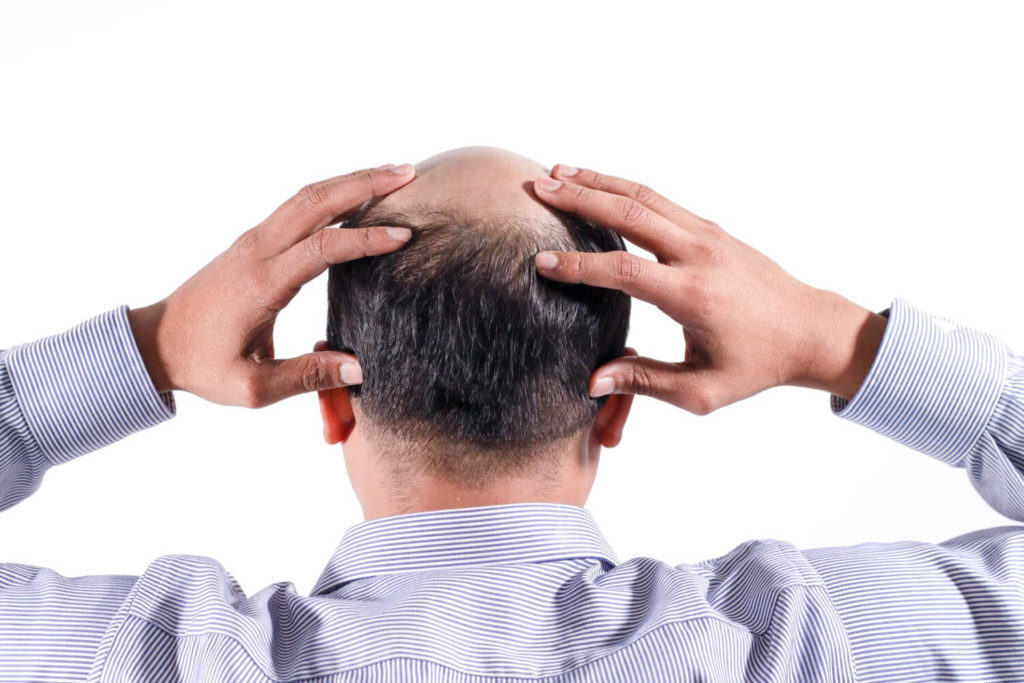
Emotional strain is one of the most recognised triggers. A bereavement, a relationship breakdown, financial pressure or a sustained period of anxiety can all push follicles into early rest, and the stress-related hair loss that follows usually surfaces a couple of months after the pressure began.
Iron deficiency
Low iron stores are commonly linked to increased shedding, and a ferritin blood test is worth doing if you are losing hair. The honest picture is less tidy than most articles suggest.
Some studies tie low ferritin, usually below around 30 ng/mL, to telogen hair loss, yet a well-known controlled study found no clear association. Correcting genuinely low iron is sensible, but treat it as one piece to check, not a guaranteed fix.
After having a baby
The hormonal drop that follows childbirth releases hairs that pregnancy had held in the growing phase for longer than usual. Shedding tends to peak around three to four months after the birth and settles for most women by their baby’s first birthday. It is one of the most familiar forms of this condition.
Illness and high fever
A heavy bout of flu, a serious infection or a spell of high fever ranks among the best-documented triggers. Recovery from viral illness, including COVID-19, has been reported to set it off, with peer-reviewed case reports describing diffuse shedding in the weeks after infection.
Surgery and general anaesthetic
An operation places the body under considerable physical strain, and that strain, not the surgery itself, is what disturbs the cycle. Shedding after a procedure usually begins once the body is well into its recovery.
Rapid weight loss and crash diets
Losing weight very quickly, or following a severely restricted diet, deprives follicles of the protein and nutrients they need. The body treats hair growth as a low priority and diverts resources elsewhere, and shedding follows.
Medications
Certain prescriptions are known to trigger shedding, including some beta blockers, antidepressants, anticoagulants and retinoids. If you suspect a medication, raise it with your GP before changing anything. Never stop a prescribed drug on your own.
Thyroid imbalance
Both an underactive and an overactive thyroid interfere with the hair cycle and can bring on diffuse shedding. A straightforward thyroid function blood test usually flags the problem, and treating it tends to settle the hair loss.
Poor sleep
Ongoing sleep disruption acts as a physical stressor on the body. Sustained poor sleep can contribute to shedding, particularly when it combines with other pressures already weighing on you.
Seborrhoeic dermatitis
An inflamed, irritated or flaking scalp from seborrhoeic dermatitis can disturb follicles enough to nudge them into shedding. Calming the scalp condition generally helps the hair recover.
A note on hair dye
Hair colouring gets blamed a lot, so it is worth being clear. There is no direct link between dyeing your hair and telogen effluvium. Harsh chemical treatment can weaken strands and cause breakage along the hair shaft, but that is damage to the hair itself, not shedding from the root, and the two are separate problems.
How Do I Know If It’s Telogen Effluvium?
The clearest of the telogen effluvium symptoms is diffuse shedding, meaning your hair thins evenly across the entire scalp without falling out in distinct patches. The first place people notice it is usually the parting or a thinner ponytail. Run through this quick self-check:
- Hair comes away evenly from all over the head, not in round, coin-sized bald spots
- You are losing more than the usual 100 or so hairs a day, sometimes far more, collecting on the pillow, in the brush and around the plughole
- The symptoms of telogen effluvium include a small white or pale bulb at the root end of shed hairs, which is normal for a resting hair and not a sign of anything worrying
- The scalp still looks healthy, with no widespread patchiness, redness or scaling
- Gently running your fingers through your hair brings several strands away each time
Keep in mind that mild seasonal hair shedding can look similar at certain times of year and usually settles on its own without any cause for concern.
How Is Telogen Effluvium Diagnosed?

Diagnosis is mostly clinical, built from your history and a scalp examination, with no single definitive test to rely on.
A trichologist starts by tracing your timeline, looking back two to three months for an illness, a stressful period, a birth or a change that could have set the shedding in motion.
A pull test gives a practical measure, where a small section of around 40 to 60 hairs is grasped and drawn through, and a higher than normal number of resting hairs coming free points towards active shedding.
Trichoscopy, a close magnified look at the scalp, helps rule out pattern hair loss or alopecia areata, and blood tests covering ferritin, thyroid function and a full blood count search for reversible causes. Because several conditions produce diffuse thinning, telogen effluvium is partly a diagnosis reached by ruling others out.
Confirm what’s causing your shedding
Will Quaye is a qualified Clinical Trichologist (Institute of Trichologists). He performs scalp examination, pull test, trichoscopy, and bloodwork guidance to rule in or out telogen effluvium versus other conditions. Free 30-minute consultation, in-person or video call. No obligation.
How Do Acute And Chronic Telogen Effluvium Differ?
The split depends on how long the shedding lasts and how clearly a trigger stands out.
| Acute telogen effluvium | Chronic telogen effluvium | |
|---|---|---|
| Onset | Sudden, with a clear trigger | Gradual, usually no single cause found |
| Duration | Clears within about six months | Persists or fluctuates beyond six months |
| Pattern | One burst of heavy shedding | Comes and goes in waves over a long period |
| Who it affects | Anyone, after a defined event | More commonly women aged 30 to 50 with previously thick hair |
The acute form is by far the more common. The chronic form is harder to pin down, since the shedding rises and falls with good and bad spells, labs frequently come back normal, and no obvious cause steps forward. People living with it describe losing very different amounts from one day to the next.
What Happens As Telogen Effluvium Clears Up?
Recovery begins once the trigger is gone and the follicles return to the growing phase. The first encouraging sign is usually a fringe of short, fine new hairs appearing along the hairline and parting, which shows regrowth is underway.
For acute cases, the shedding tends to settle within three to six months of the cause resolving, and density builds back over the following months.
Good nutrition and gentle handling give the follicles the conditions they need, and the same habits that help you stimulate hair growth at any age apply equally well to a scalp recovering from shedding. Chronic cases take longer and may need ongoing review.
What Is The Best Telogen Effluvium Treatment?
The most effective treatment for telogen effluvium is correcting whatever triggered it, because this is a reaction to an underlying cause and not a condition to be patched over. Once the root is dealt with, the hair cycle resets on its own.
1. Fix what started it
Correct a confirmed iron or vitamin deficiency, stabilise an over or underactive thyroid, ease the stressor behind the shedding, restore proper nutrition after a period of dieting, and review any suspected medication with your GP. Resolving the cause is what allows the follicles to recover.
2. Understand where minoxidil fits
Minoxidil is not a cure for this condition, and when the trigger is known and treatable, it is usually not needed at all. It may have a place in nudging regrowth along in stubborn or chronic cases, but it is not the first move, and for true shedding of this kind it does not have to be used indefinitely. Many clinics present it as the headline fix, which overstates what it does here.
3. Know why shampoos and supplements mostly fall short
The hormone DHT drives pattern baldness, but it plays no part in telogen effluvium, so DHT-blocking products and thickening shampoos aim at the wrong target. Biotin and caffeine-based products lack solid evidence unless you have a genuine deficiency to correct. For the full picture on how well hair growth supplements work, we cover the evidence in detail.
4. Avoid the common mistakes
Do not switch products every week in a panic, do not begin aggressive treatments before you have a diagnosis, do not stop a prescribed medication without medical advice, and handle new regrowth gently in place of heavy styling.
Telogen Effluvium Or Pattern Hair Loss, Which Is It?
The two are frequently confused because both lead to thinner hair, yet they behave very differently.
| Feature | Telogen effluvium | Pattern (androgenetic) hair loss |
|---|---|---|
| Onset | Sudden, tied to a trigger | Slow and gradual |
| Spread | Diffuse, across the whole scalp | Follows a set shape: parting, crown or hairline |
| Follicles | Pause, then recover fully | Shrink and miniaturise over time |
| Course | Reverses once the trigger clears | Continues without treatment |
Telogen effluvium resolves on its own once the cause is addressed, whereas pattern hair loss is genetic and keeps advancing without treatment, so recognising which one you are dealing with shapes the treatment.
What If The Shedding Reveals Something Underneath?

Sometimes, as the shedding of telogen effluvium lifts, it uncovers an early pattern hair loss that was quietly present all along. The shedding did not cause it. By thinning the surrounding hair, the episode simply made the existing condition easier to see. The two can run side by side, which is one reason a proper assessment counts for so much before you decide what to do next.
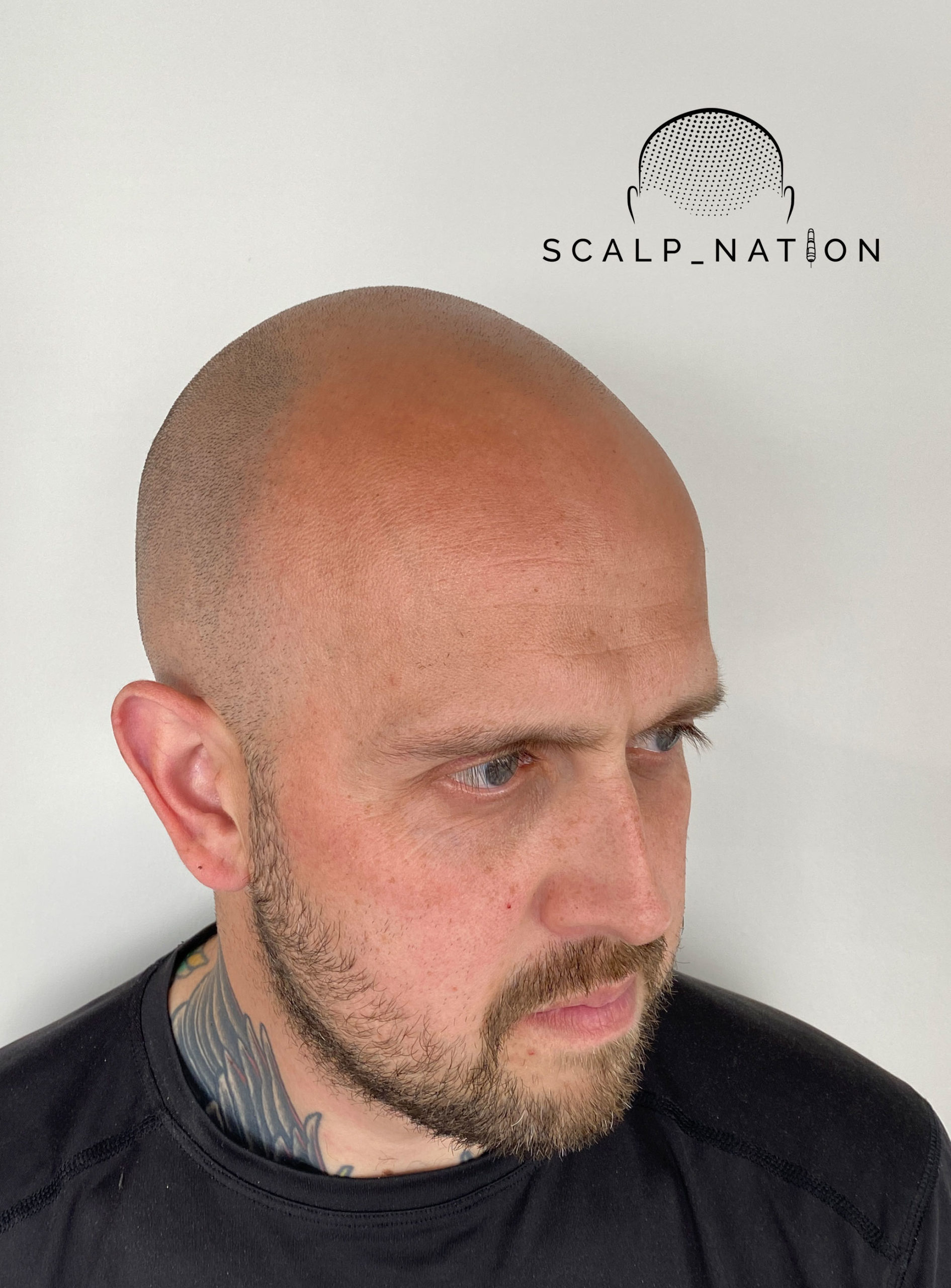
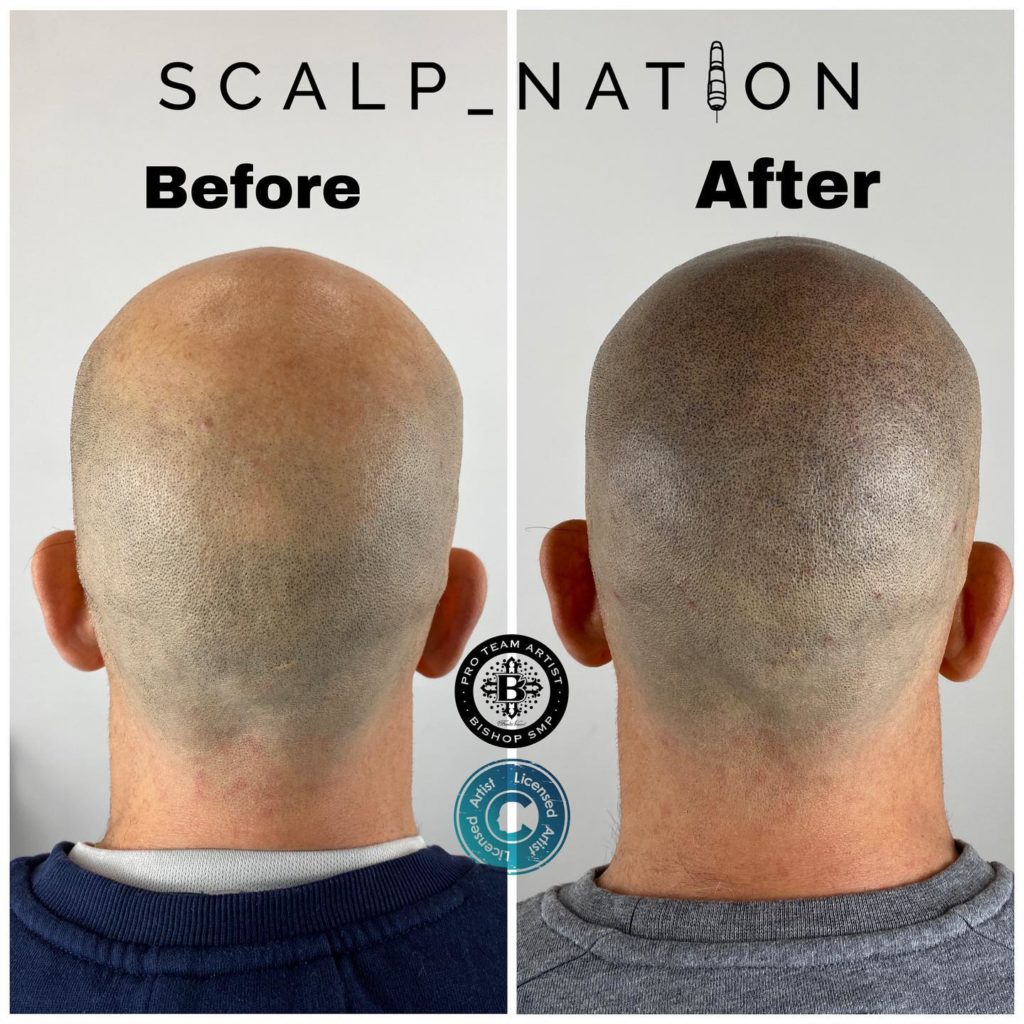
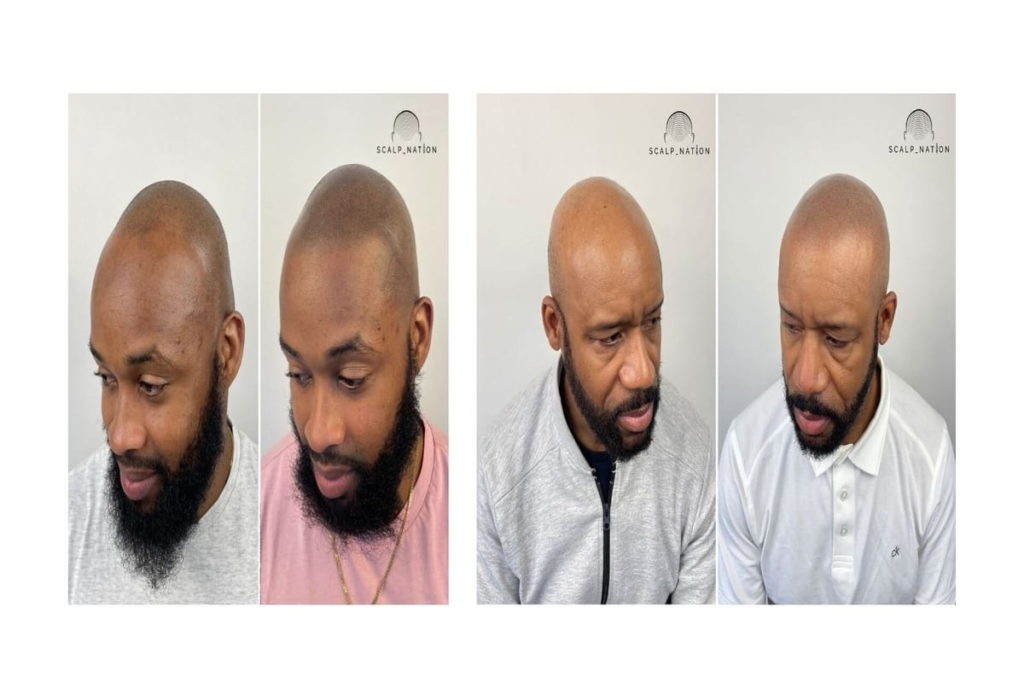
When that underlying loss has settled into a clear pattern, our go-to cosmetic recommendation is scalp micropigmentation. We use it to rebuild the look of real density wherever the hair has thinned, placing thousands of tiny pigment deposits that match your own hair and blend in with any growth you still have. For anyone who has had enough of daily products and wants a result that holds without the upkeep, it gives back the fullness the shedding exposed, and it stays put through washing, sweating and time.
Shedding settled but density hasn’t returned?
Will Quaye assesses whether an underlying pattern loss is now showing through, and whether SMP would restore the density. Qualified Clinical Trichologist and multi-award-winning SMP artist. Free 30-minute consultation, in-person or video call. No obligation.
FAQ
How is telogen effluvium diagnosed?
It is diagnosed clinically, through a review of your recent history, a scalp examination and a pull test that gauges how much hair is actively shedding. Blood tests for ferritin, thyroid function and a full blood count are used to identify reversible causes and to rule out other conditions that cause diffuse thinning.
Can low iron cause telogen effluvium?
Low iron stores are associated with increased shedding and are worth testing, since correcting a genuine deficiency is sensible. The evidence that raising borderline-low iron reverses the hair loss is mixed, so it is best viewed as one cause to check and not the single answer.
How do you stop telogen effluvium?
You cannot force the shedding to stop, because it follows a cycle that has already been set in motion. What you can do is remove or treat the trigger and let the follicles reset, supporting them with good nutrition and gentle hair care as regrowth gets underway.
Can hair grow back after telogen effluvium?
Yes, in nearly all cases. The follicles are not destroyed during the episode, only paused, so once the cause is resolved, they return to normal function and lost density usually comes back within a year.
Can men get telogen effluvium?
Yes. It affects both men and women, even if it is reported more commonly in women. In men, it can overlap with early pattern baldness, which is why diffuse shedding sometimes reveals an underlying genetic loss that needs separate attention.