
Half an inch per month. That’s what a healthy follicle produces, but age, nutrition, hormones, and scalp health all quietly chip away at that figure before most people notice anything’s wrong. How to stimulate hair growth comes down to matching the right tool to the actual cause. Biotin won’t fix DHT-driven loss. Minoxidil won’t stop shedding triggered by low iron.
Insight into Hair Growth
- The anagen phase loses years with every decade. That seven-year growth window from your twenties can compress to just two by your fifties, leaving each strand shorter and finer than the last.
- Taking supplements won’t speed things up if your levels are already normal. Protein, iron, zinc, biotin, and vitamin D correct deficiencies. They don’t push you above your genetic ceiling.
- Four minutes of daily scalp massage increased measurable hair thickness in a 24-week study. Low-risk, zero equipment needed.
- Minoxidil extends the growth phase and can reactivate dormant follicles. It works, but requires indefinite use to keep those results.
- Don’t expect overnight results from anything on this list. Every intervention takes three to six months before you’ll see a real difference.
- Six months in and nothing’s changed? A trichologist assessment can identify the actual cause and stop you spending months on the wrong fix.
Vitamins and Supplements for Hair Growth
Deficiency causes hair loss. Correcting that deficiency restores hair growth. Go above your actual needs and nothing extra happens. That’s the gap between what supplement marketing promises and what the evidence delivers.

Biotin
Biotin’s everywhere. Walk into any pharmacy and you’ll find it marketed as the go-to fix for thinning hair. The evidence tells a quieter story. Deficiency does cause hair loss and brittle nails, but most people eating a varied diet aren’t deficient. Eggs, salmon, sweet potato, and nuts cover it well. Worth supplementing if you’ve had gastric surgery, take certain anticonvulsants, or follow a heavily restricted diet. Otherwise, you’re mostly paying for expensive urine.
Vitamin D
Low vitamin D shows up consistently in cases of telogen effluvium and alopecia areata. If you’re in the UK, you’re likely deficient from October through March. The sun doesn’t deliver enough UVB in winter. 1,000 to 2,000 IU daily through the darker months is a sensible hedge for most people. Seasonal shedding that clears each spring? Start here.
Iron and Ferritin
Iron deficiency gets missed as a cause of shedding more than any other nutrient issue, particularly in women with heavy periods or anyone eating little red meat. Ferritin, your stored iron, is the more useful number to check. Drop below 30 mcg/L and shedding increases noticeably. Red meat, lentils, and spinach are the best dietary sources. Eat them alongside something rich in vitamin C to improve absorption.
Zinc
Zinc underpins the protein structures surrounding each follicle. Push your intake above normal levels and you won’t see any extra benefit. Food-wise, oysters are absurdly efficient, at around six times the daily requirement in just two of them. Not a shellfish person? Pumpkin seeds and beef cover it just as well.
Omega-3 Fatty Acids
One randomised trial found omega-3 supplementation improved perceived hair fullness after six months. These fats nourish the scalp and support the follicle membrane. Oily fish twice a week (salmon, mackerel, sardines) or a 1 to 3g daily fish oil supplement covers this without any fuss.
Hair growth products fill specific gaps. Food covers the rest. Protein is the priority, since hair is roughly 80% keratin built from amino acids. Eggs, lean meat, legumes, and Greek yoghurt are the best sources. Avocado and nuts add the healthy fats your scalp membrane needs. Dehydration slows cell division throughout the body, follicles included.
Want a closer look at the evidence? This review of hair growth supplements goes through each category in more depth.
Topical Treatments and Oils
| Treatment | Evidence Level | Time to Results | Key Notes |
|---|---|---|---|
| Minoxidil 2%/5% | Strong (multiple RCTs) | 3–6 months | Extends anagen; requires indefinite use |
| Rosemary oil | Moderate (one RCT vs minoxidil 2%) | 3–6 months | Comparable results; less scalp irritation |
| Caffeine topicals | Emerging | Not established | May counter DHT at follicle level |
| Peppermint oil | Limited (one animal study) | Not established | No robust human trials yet |
| Castor oil | Minimal (no clinical trials) | N/A | Conditions the strand, not the follicle |
Minoxidil
Best option you can get without a prescription. Minoxidil prolongs anagen and widens blood vessels around the follicle, so roots get more of what they need. Expect to wait three to four months before noticing a difference. Stop using it and those gains reverse, frequently within three months. This isn’t a short course. Don’t start unless you plan to keep going.
Rosemary Oil
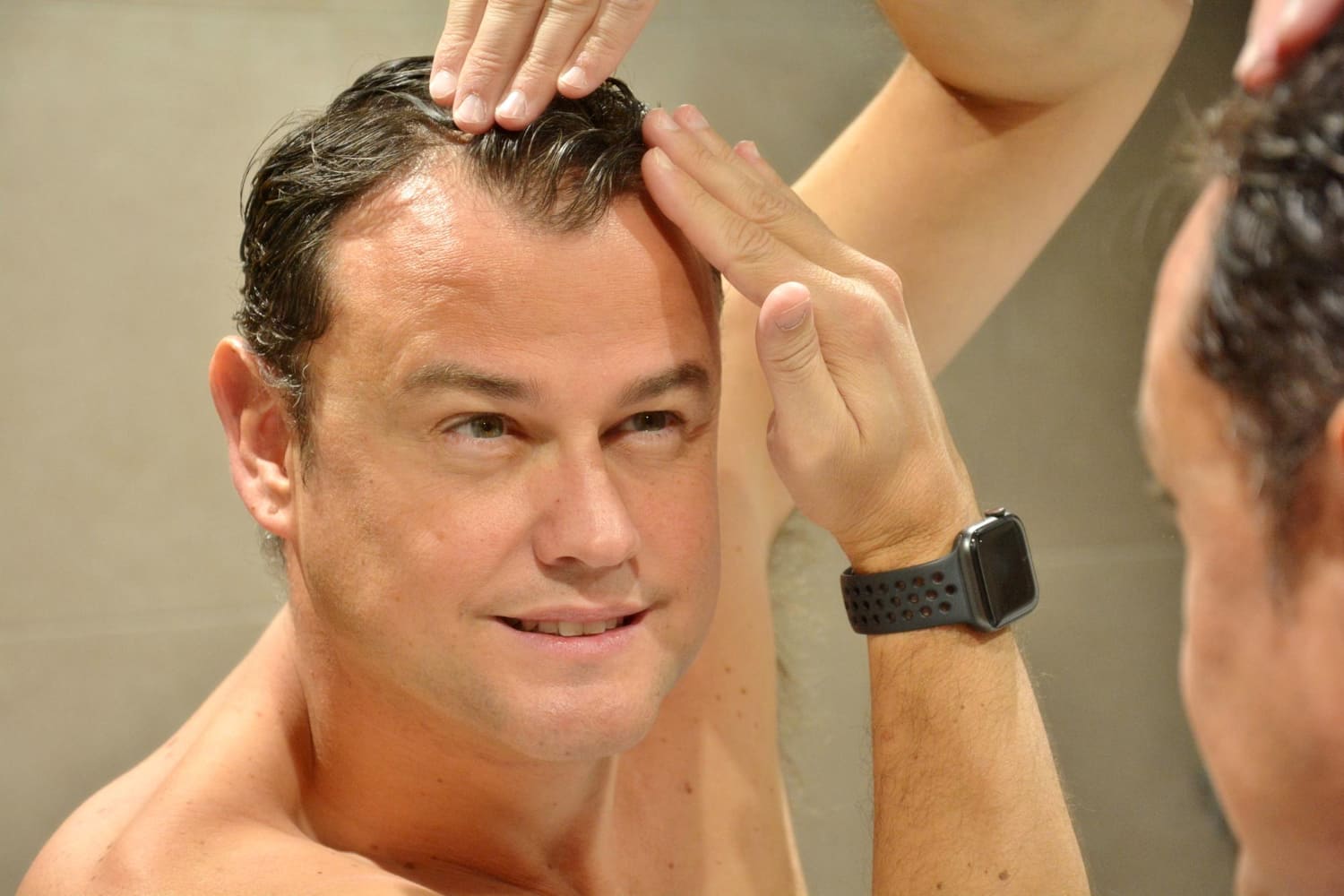
Back in 2015, a randomised trial put rosemary oil directly against minoxidil 2% over six months. Both produced similar increases in hair count by the end, but rosemary oil caused far less scalp irritation. One study isn’t a verdict, but it’s worth knowing if minoxidil leaves your scalp itching.
Castor Oil
No clinical trials support castor oil for hair growth, yet it remains one of the most searched hair remedies online. Part of that is texture. It’s thick, it coats the hair shaft, and it makes strands feel temporarily thicker. That tactile feedback gets misread as growth. Worth using if you like how it feels, but nothing in it reaches the follicle.
Scalp Stimulation Techniques
Not all scalp stimulation techniques are created equal. Two of them have clinical backing.
Scalp Massage
A 2016 ePlasty study followed nine men through 24 weeks of four-minute daily scalp massages. Hair strands came out measurably thicker. Small sample, granted, but the reasoning holds. Pressing your fingertips against the scalp stretches follicle cells and increases local blood flow, pushing more nutrients to the roots.
Firm, slow circles with your fingertips, crown to temples. Five minutes is all it takes.
Micro-Needling (Dermarolling)
A 2013 randomised trial combined micro-needling with minoxidil and found considerably stronger results after twelve weeks than minoxidil alone. Micro-injuries appear to trigger wound-healing responses, activating dormant follicles and raising growth factor levels locally. Stick to 0.5 to 1mm needles and pair it with a topical. Used on its own without any topical, the evidence is thinner.
What Doesn’t Help
Some habits actively work against you. Aggressive brushing stresses the hair shaft and can damage follicle openings over time. Repeated tension from tight ponytails, braids, or extensions pulls at the follicle opening, and that damage accumulates silently for years before it shows. Heat tools won’t hurt your follicles directly, but the strand breakage they cause makes hair look like it’s barely growing.
Washing Frequency
Washing doesn’t stimulate growth, but the scalp environment matters. Wash too regularly and you strip the natural oils. Skip too many washes and sebum and product residue build up around follicle openings. Two to three times a week works for most people. Go by how your scalp feels between washes, not what the bottle says. This guide to improving hair density picks up the practical day-to-day side from here.
Hair Growth by Age

Hair grows fastest between 15 and 30. After that, anagen phases shorten, follicles miniaturise, and things get gradually more complicated.
Your 20s and 30s
Two things catch most people off guard at this age. Telogen effluvium is stress-triggered shedding that usually clears within six to nine months once the cause passes. Traction alopecia from years of tight styles or heat damage is different and doesn’t always reverse. If your hair looks fine right now, take a hairline photo as a baseline.
Your 40s and 50s
For women, declining oestrogen drives diffuse thinning across the scalp. For men, DHT sensitivity shows up as temple recession or vertex thinning. This article on why men go bald explains the full biology behind it. The anagen phase has also shortened, which is why hair stops reaching the lengths it used to. Minoxidil is the first-line topical. Before starting, check ferritin, vitamin D, and thyroid. Deficiencies mimic hormonal loss patterns. For women with diffuse thinning who don’t respond to minoxidil, SMP for women adds density between existing strands.
Your 60s and Beyond
Follicle miniaturisation has been running for decades by this point. Sebum production drops too, so that moisturising shampoo might now be stripping what little oil remains. Switch to sulphate-free, once or twice a week. For substantial density loss, scalp micropigmentation is a realistic long-term option.
Hair Growth Myths
| Myth | The Reality |
|---|---|
| Shaving makes hair grow back thicker or faster | Shaving cuts the strand at its widest point and replaces the natural tapered tip with a blunt edge, which is why regrowth feels coarser. That texture is what created the myth. The follicle, sitting several millimetres below the surface, is completely untouched by the razor. |
| Onion juice stimulates hair growth | One 2002 study on alopecia areata patches, 23 participants, no placebo arm, never meaningfully replicated. Too thin to act on. |
| Inverting your body boosts scalp circulation | Scalp blood flow runs on arterial pressure and local vasodilation, not gravity. Standing on your head for a few minutes won’t change anything lasting. |
| Stress reduction directly grows hair | Not directly. High cortisol pushes follicles into rest prematurely, so shedding follows two to three months after a stressful period. Getting cortisol down lets the cycle reset, but stress reduction itself doesn’t trigger new growth. |
When Natural Methods Are Not Enough
Give anything you try a full six months. Stopping at week four because nothing looks different yet is one of the most common mistakes people make with hair treatments.
If you’ve sorted the diet, used a well-evidenced topical consistently, and six months have passed without any real change, you’re likely dealing with something that self-directed fixes can’t reach. Moderate androgenetic alopecia, scarring alopecia, autoimmune hair loss, hormonal imbalances, these all need clinical identification before they’ll respond to treatment. Applying the wrong fix to the wrong cause just wastes time.
A trichology assessment identifies the root cause, rules out anything reversible, and maps a clear path forward. To get a full clinical picture, book a consultation at ScalpNation’s trichology clinic.
Six months in with no change? Get a clinical picture
A trichology assessment with Will Quaye identifies the root cause — DHT, scarring, autoimmune, hormonal — and maps a clear path forward. Stop wasting months on the wrong fix. Free consultation, no obligation.
FAQ
How can I stimulate hair growth?
Sort nutritional deficiencies first, iron and vitamin D especially. If androgenetic loss is involved, apply minoxidil consistently. Add daily scalp massage and cut habits that stress your follicles mechanically. Nothing shows before three to six months, so don't bail early.
What vitamins stimulate hair growth?
Vitamin D and iron are the most clinically relevant. Zinc and biotin matter when intake falls short. Omega-3s may help with density. None of them will push you above your genetic ceiling.
Does shaving stimulate hair growth?
No. Shaving removes the strand at skin level. The follicle below is completely untouched. Regrowth just feels coarser because the tapered tip gets cut flat.
Does massaging the scalp stimulate hair growth?
Yes. A 2016 trial showed measurably increased strand diameter after 24 weeks of four-minute daily scalp massage. Low-cost, zero equipment needed, and better-supported than most things marketed for hair growth.


 By Will Quaye

No comment yet, add your voice below!