
Most men who are going to lose their hair notice the first changes somewhere between their late teens and mid-thirties, and a fair number start earlier than they expect. Around a quarter of those affected notice it before 21, close to two-thirds show some loss by 35, and nearly 85% have visible thinning by 50.
The age when men start balding is driven mostly by genetics, and the earliest signs tend to be subtle enough to miss. Catching those signs sooner gives you far more room to hold onto what you have, which is exactly why the timeline is worth knowing.
Key Takeaways
- The ages when hair loss most commonly starts, and the share of men affected through each decade of life.
- Why losing your hair at 20 or 25 changes the outlook in ways that loss at 45 does not.
- A mirror self-check for the earliest signs, before anyone else would spot them.
- How to tell genuine pattern balding apart from a temporary shed brought on by stress, season, or illness.
- What a proper assessment gives you, and the options that still work once loss is extensive.
At What Age Do Men Usually Start Balding?
For most men with a genetic tendency towards hair loss, the first changes arrive between the late teens and the mid-thirties, and they stay faint enough to overlook at the start. The hairline might creep back by a few millimetres, or the crown might lose a little coverage, years before the pattern shows clearly in photos. A smaller group sees faster movement from the early twenties, with coverage dropping noticeably within a few years.
Behind nearly all of it is androgenetic alopecia, an inherited sensitivity to the hormone DHT that accounts for the large majority of male hair loss. DHT is the real reason why men go bald, gradually shrinking certain follicles until they stop growing visible hair, with the ones at the back and sides holding firm. When your balding has less to do with your testosterone levels and more to do with how sensitive your follicles are, a trait written into your genes. The more sensitive they are, the sooner a man tends to startbalding.
What Percentage Of Men Go Bald At Each Age?
The share of men affected climbs steadily with each decade, from a small minority in the early twenties to the majority once men reach their fifties. The figures below draw on data from the American Hair Loss Association and population-based dermatology studies, so you can see roughly what percentage of men go bald at each stage of life and what is usually happening to the hair by then.
| Age | Share of men with noticeable hair loss | What is usually happening |
|---|---|---|
| By 21 | About 25% of those prone to it | Earliest hairline or temple changes, commonly brushed off as a maturing hairline |
| By 30 | Around 30% | Recession and crown thinning get harder to ignore, the decade most men first notice |
| By 35 | Roughly two-thirds (any degree) | The pattern has set in for most who are affected, with density visibly down |
| By 40 | About 40% (moderate to extensive) | A defined thin patch or clear recession for many |
| By 50 | Up to 50% with marked loss, around 85% some thinning | Half show marked loss, the majority some degree |
| By 60 to 70 | Climbing to around 80% by 70 | Extensive loss more common, with the back and sides usually stable |
These figures make it easy to see when men usually start balding, yet they need one clarification to count correctly. The higher numbers, such as two-thirds by 35, cover any noticeable thinning at all.
The lower ones, like 40% through the forties, cover moderate to extensive loss where a bald patch or clear recession has set in. Both readings hold true, and they simply track different degrees of the same condition. Your own position on this scale depends on your genetics and, above all, on how young you were when it first showed.
Is Balding At 20 Something To Worry About?
Noticing the first signs of balding at 20 is earlier than the average, yet on its own it gives no cause for alarm. What it signals, however, deserves a closer look.
Hair loss showing clear recession this young tends to move faster, so a man thinning at 20 is more likely to reach the later stages by his thirties than one whose loss holds off until the forties. The early timing brings an upside as well, since the sooner loss is caught, the more hair remains to protect and the better treatment performs.
What Does Balding At 25 Mean For The Years Ahead?
Hair loss that has already begun by 25 is usually at an early stage, which puts you in a strong position to slow it down or hold it steady. The reason is biological.
Plenty of living hair remains to defend, and treatments built to protect existing follicles have the most to work with at this point, so spotting balding at 25 gives you a real head start. A pattern moving quickly also reveals itself by now, giving you a clear signal of where things are heading before the loss gets far.
None of that cancels out how heavy it can feel. The thought of going bald in your mid-twenties weighs on a lot of men, and that reaction deserves as much attention as the practical side of any treatment plan.
Spotting early signs in your 20s? Act now
Will Quaye is a qualified Clinical Trichologist (Institute of Trichologists). He assesses scalp health, hair growth cycle, and progression speed while follicles still respond to treatment. Book a free 30-minute consultation, in-person or video call. No obligation.
What Are The First Signs Of Balding?
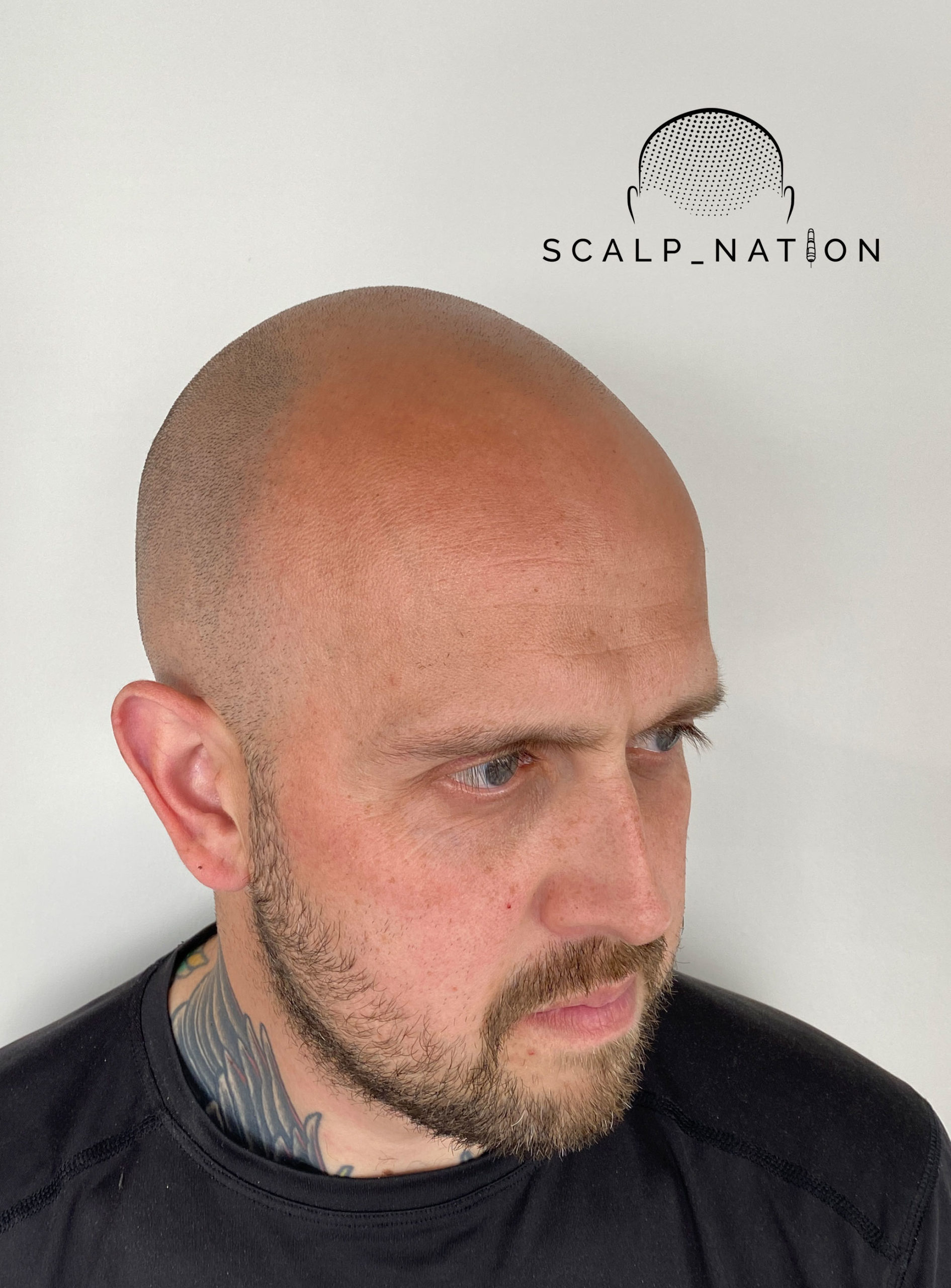
The earliest signs of balding show up as small, steady changes you can catch in the mirror long before anyone else would notice. The trick is knowing what to compare. Line up a recent photo against one from a couple of years back, taken in similar overhead light, and the changes that are easy to miss day to day become obvious.
These early signs of balding are simple to run past, so work through this quick self-check:
- More hair than usual collecting in the shower drain, on the pillow, or in your brush, beyond the 50 to 100 strands everyone sheds daily.
- A hairline looking uneven, or temples edging backwards into an M shape.
- Scalp showing through more clearly at the crown under bright overhead light or in photos taken from behind.
- Styling that no longer holds, with thinner hair falling flat where it once kept its shape.
- The top of the head catching the sun or burning where hair used to cover it.
A receding hairline deserves its own mention here, as it ranks among the most recognisable warning signs, yet telling a genuinely receding hairline from a naturally maturing one is not always easy to judge alone. The seven stages mapped out on the Norwood scale for balding show how a hairline moves from its first retreat towards the later patterns, which helps you work out where yours falls.
One distinction is worth keeping in mind for the next part. Pattern hair loss creeps along gradually and keeps to the hairline and crown, so sudden shedding, patchy bald spots, or hair coming out in clumps point to something other than the genetic kind.
How Can You Tell Pattern Balding From A Temporary Shed?
Genetic pattern balding comes on slowly and keeps to the hairline and crown, so a sudden, even thinning across the whole head usually points to a temporary cause with a trigger behind it. Most of these clear up on their own once the trigger passes, which is the opposite of how genetic loss behaves. Four causes explain most of this reversible shedding.
1. Telogen effluvium
A large share of follicles slips into the shedding phase at once, usually two to three months after a physical shock such as surgery, illness, a crash diet, or a high fever. The shed looks alarming because it spreads evenly across the head, yet the hair grows back once the body recovers.
2. Stress
Sustained pressure on the body knocks the growth cycle out of its normal rhythm and sends more hairs into shedding. A stressful stretch that lines up with heavier fallout is usually the giveaway. Just how much hair loss can be caused by stress depends on how long the pressure lasts, and the hair usually grows back once life settles down.
3. Diet and thyroid problems
Low iron, too little protein, or an under-active or over-active thyroid can thin hair across the entire scalp. Each of these is correctable, and density usually returns once the shortfall or imbalance has been put right.
4. Seasonal change
Hair sheds more heavily in autumn for many people, a normal rhythm that passes within a few weeks. Plenty of men take any extra fallout as a sign of pattern loss, which it rarely is.
That autumn shedding is seasonal hair loss, which a few simple steps can help limit.
The clearest tell is whether the hair recovers without treatment. Temporary shedding reverses once its cause is handled, and pattern loss keeps worsening on its own. When thinning holds to the hairline and crown and shows no sign of filling back in, the genetic kind is the likely answer, and that is the point to get it assessed properly.
What Should You Do If You’re Spotting The First Signs?
Getting the hair assessed early is the single most useful move, because nearly every option works better on recent loss than on loss that is already well established. There is a biological reason for the urgency, as a follicle that has fully shrunk and stopped producing hair is far harder to coax back, so the early window is the one that counts.
There is no fixed age when men start balding, which means the right time to pay attention is simply the first moment you notice a change.
A proper assessment gives you three things worth having:
- An expert view of the exact pattern of your loss and how far it has gone
- A sense of how fast it is moving, which shapes how urgently you should act
- A plan matched to your stage, in place of trial and error picked up from forums
A trichology assessment covers all three, pairing a close look at the scalp with advice built around your hair and the cause behind the loss.
Caught early enough, loss can usually be slowed or held with proven treatments, which is reason enough to act at the first sign and not wait to see how far it goes. Treatment has the most to work with before the follicles shut down.
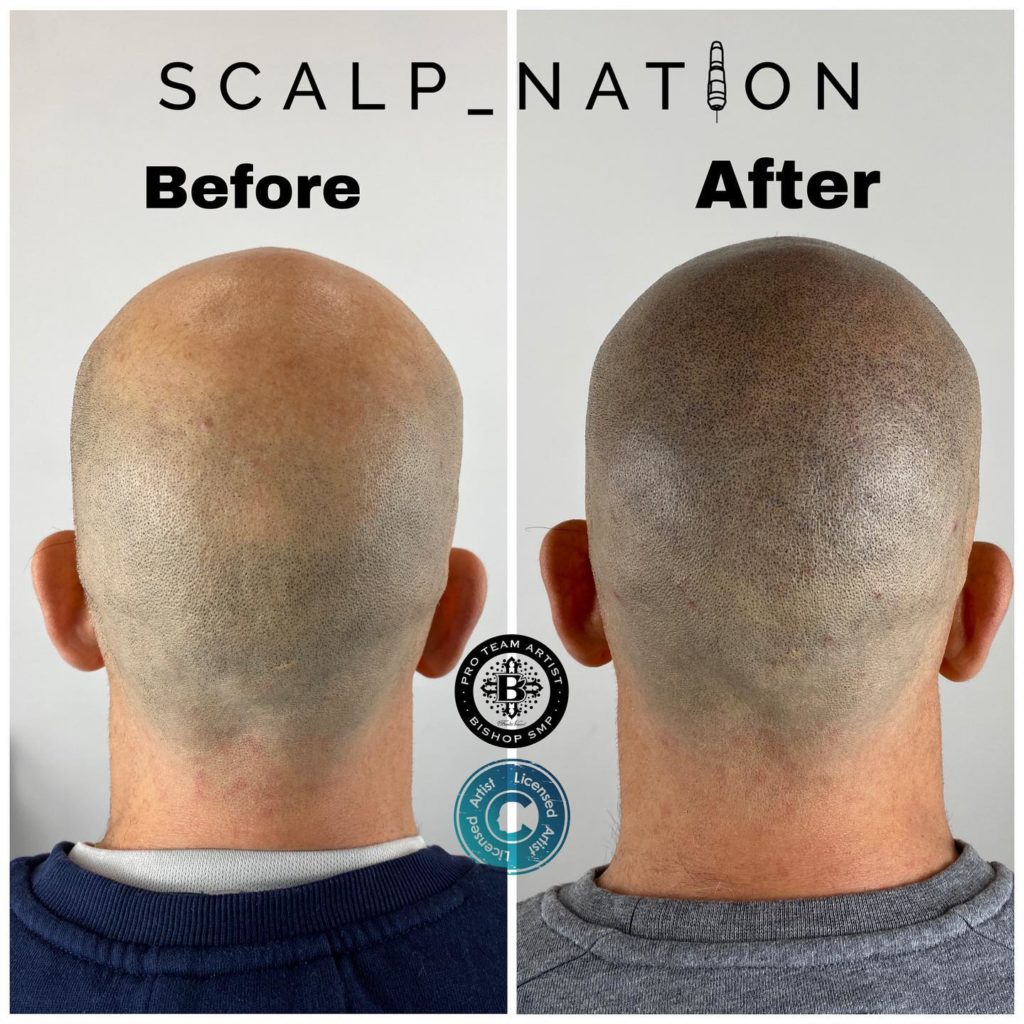
Not everyone catches it in time, and that is worth being honest about. For men whose loss is already extensive, where density has gone, and medication has little left to preserve, restoring the look of a full, closely cropped head of hair becomes the realistic goal. This is where Scalp Micropigmentation for men comes in, replicating the appearance of real hair follicles across the scalp and working however far the loss has gone. It delivers a clean, defined result without surgery and without daily upkeep.
Wherever you are on the timeline, from the faintest changes at 20 to a settled pattern at 50, the earlier you work out what is happening, the more say you keep over how it goes from here.
From early signs to settled patterns, start here
Will Quaye is a qualified Clinical Trichologist (Institute of Trichologists) and multi-award-winning SMP artist. Free 30-minute consultation covering early-stage trichology treatment or SMP for extensive loss. In-person at Hornchurch or video call. No obligation.
FAQ
Is it normal to start balding at 20?
Starting in your early twenties is earlier than the average, yet it happens to a meaningful share of men, with roughly one in four of those affected noticing a change before 21. It points to a genetic tendency that showed up early, which calls for prompt action and gives no real cause for panic.
What is usually the very first sign of balding?
For most men, the first sign of balding show at the hairline, which begins to look uneven or edge backwards at the temples. Extra hair in the shower or on the pillow can appear around the same time, and thinning at the crown tends to follow.
Can you stop male pattern baldness once it starts?
Pattern baldness can usually be slowed or held with proven treatments, and in early cases some density can be recovered, but a full reversal is uncommon once follicles have shrunk for good. The results are strongest when treatment begins at the first sign, which is why early action counts for so much.
Does a receding hairline always mean you will go bald?
Not always, because a hairline that settles slightly in the late teens or early twenties can be a mature hairline that then stays put for decades. A receding hairline that keeps moving back over time, paired with thinning at the crown, is the one that points towards pattern loss.
Will you go bald if your father is bald?
A bald father raises your odds, yet he is not the whole story, since the genes behind hair loss come from both sides of the family. Plenty of men with bald fathers keep their hair, and plenty with full-haired fathers lose theirs, so family history moves the odds without deciding the outcome.


 By Will Quaye
No comment yet, add your voice below!