
Many people assume scalp micropigmentation is the same as getting a tattoo on your head, and that assumption leads many of them towards the wrong choice when they first face hair loss. Both treatments use needles and pigment, but they were created for different reasons. Scalp micropigmentation restores the look of natural hair for people with thinning or balding, and traditional tattooing creates decorative body art.
Our short video explains the core scalp micropigmentation and tattoo differences, before we explain each one in full.
Key Takeaways
- SMP needles are 75% smaller than tattoo needles, creating precise hair follicle-sized impressions
- Pigment depth differs dramatically — SMP targets upper dermis layers, whilst tattoos penetrate much deeper
- Professional training requirements vary significantly, with SMP demanding specialised scalp and hair loss expertise
- Pain levels favour SMP due to shallow penetration and refined technique
- Long-term results age differently through distinct pigment compositions and application methods
Is Hair Pigmentation Tattoo the Same as SMP?
A hair pigmentation tattoo and scalp micropigmentation describe the same treatment when the goal is hair restoration. The name is the plain-language version that some people use for SMP, where fine dots of pigment are placed into the scalp to copy the look of short, closely shaved hair or to add the appearance of more density.
It refers to the same procedure as scalp micropigmentation, a method built specifically for hair loss and not for decoration. The wording can cause confusion because it also sounds like a standard decorative tattoo, and the two are far apart.
What is a Hair Follicle Tattoo?
A hair follicle tattoo is another name for scalp micropigmentation, used because the treatment builds the look of hair from many tiny follicle-shaped dots. The term points to what the pigment imitates, which is the appearance of real hair follicles across a shaved or thinning scalp, and not a picture or design.
What Makes SMP Equipment So Specialised?
The equipment difference between scalp micropigmentation vs tattoo procedures reveals the first major distinction. Traditional tattoo needles simply cannot replicate the delicate appearance of natural hair follicles. These standard tools create marks far too large and imprecise for convincing scalp work.
SMP practitioners employ 3-point micro-needles that measure 75% smaller than the finest tattoo needle available. This dramatic size reduction allows artists to deposit pigment dots virtually indistinguishable from actual hair follicles. The needle’s smooth point and porous body provide exceptional control over pigment flow, enabling practitioners to adjust the amount of ink entering the skin with remarkable precision.
Digital rotary machines further separate SMP from traditional tattooing equipment. Unlike the heavy, loud coil machines tattoo artists use, SMP devices operate quietly through computerised systems controlling speed, needle depth, and vibration levels. This technological advancement allows for the meticulous work required to create thousands of perfectly placed microdots across the scalp.
The equipment sophistication reflects the procedure’s medical-aesthetic nature. Where tattoo artists focus on creating bold, artistic designs, SMP practitioners must simulate nature itself — requiring tools capable of microscopic precision and consistent performance throughout lengthy sessions.
Why Does Pigment Depth Matter More Than You Think?

Pigment depth creates dramatically different outcomes between these procedures. Scalp micropigmentation operates at just two dermis layers, whilst traditional tattoos penetrate five layers deep. This depth difference affects everything from healing to hair follicle safety.
Depth and Penetration Comparison
| Aspect | Scalp Micropigmentation | Traditional Tattoo |
|---|---|---|
| Penetration Depth | 2 dermis layers (0.5-1.2mm) | 5 dermis layers (1-2mm+) |
| Pigment Spread Risk | Minimal due to shallow placement | Higher due to deeper penetration |
| Healing Time | 28-50 days | 2-4 weeks |
| Trauma to the Scalp | Minimal | Moderate to high |
| Hair Follicle Safety | Protected | Potential risk |
The shallow SMP placement serves multiple purposes rooted in trichology and scalp health understanding. At this specific depth, pigment maintains its shape without spreading, allowing practitioners greater control over each dot’s appearance.
The shallow depth also protects the scalp’s delicate structure. Going deeper risks damaging hair follicles that might still be functioning, whilst the controlled depth minimises trauma to surrounding tissue. This consideration proves particularly important for clients with existing hair who want density enhancement rather than complete coverage.
How Do Different Techniques Create Different Results?
The application method represents another fundamental difference in the scalp micropigmentation vs tattoo comparison. Traditional tattooing employs a scraping method, dragging needles across the skin to create continuous lines and fill solid areas. This technique suits artistic designs requiring smooth gradations and bold outlines.
Scalp micropigmentation uses a pointillism or dotting method, placing individual pigment deposits strategically across the scalp. Each dot represents a single hair follicle, positioned to mirror natural growth patterns unique to each client. This impressionist approach creates realistic results through strategic dot placement rather than continuous coverage.
The dotting technique requires significantly less needle contact and pressure against the scalp. Practitioners must avoid the “blowout” effect, where excessive pressure causes pigment to spread beneath the skin’s surface, creating unnatural-looking patches that destroy the follicle illusion.
What’s Really in SMP Pigment vs Tattoo Ink?
Pigment composition reveals perhaps the most significant difference between these procedures. Traditional tattoo inks contain various additives and composite colours to achieve the rainbow spectrum tattoo artists require. Black tattoo ink often combines cyan, magenta, and other colours that can separate over time, potentially causing unwanted blue or green tints as the tattoo ages.
Scalp micropigmentation pigments typically use iron oxide-based formulations specifically designed for scalp applications. These pigments resist colour changes, maintaining their intended shade throughout the fading process. Some practitioners prefer carbon-based pigments, but these are specially formulated to age correctly in scalp tissue — quite different from standard tattoo inks.
The pigment stability proves crucial for long-term satisfaction. Traditional tattoo inks can oxidise and shift colours unpredictably, whilst quality SMP pigments fade naturally to lighter versions of their original shade. This controlled ageing ensures clients maintain a natural appearance even as the pigment gradually lightens over several years.
The customisation capability of SMP pigments allows practitioners to match individual skin tones and desired hair colours precisely. Using dilution ratios, artists create bespoke shades that blend seamlessly with existing hair or complement the client’s natural colouring — a level of customisation that standard tattoo inks cannot provide.
Are the Training Requirements Actually Different?
Professional preparation represents a stark contrast in the scalp micropigmentation vs tattoo landscape. Both fields require basic licensing — typically a tattoo licence and bloodborne pathogen certification — but the specialised knowledge demands differ dramatically.
Training and Expertise Requirements
| Training Aspect | SMP Practitioners | Tattoo Artists |
|---|---|---|
| Medical Knowledge | Hair loss conditions, scalp anatomy | Basic skin knowledge |
| Specialised Skills | Hairline design, follicle simulation | Artistic design, shading techniques |
| Client Psychology | Hair loss trauma, restoration expectations | General customer service |
| Equipment Training | Digital rotary systems, micro-needles | Coil/rotary machines, various needle types |
| Apprenticeship Duration | 6+ months typically | Varies, often shorter |
Working with a qualified SMP practitioner matters
Will Quaye combines multi-award-winning SMP artistry with Clinical Trichologist credentials (Institute of Trichologists) — the exact dual expertise this section describes. Book a free consultation, in-person or video call, no obligation.
How Do Pain and Healing Compare?
The discomfort experience differs substantially between these procedures. Scalp micropigmentation proves significantly less painful due to the shallow needle penetration and gentler dotting technique. Most clients describe the sensation as tolerable, often comparing it to light scratching or minor pinpricks.
Traditional scalp tattoos create more intense discomfort through deeper penetration and the scraping motion required for artistic designs. The scalp’s sensitivity, combined with proximity to bone, can make conventional tattooing quite uncomfortable for many clients.
Healing timelines also vary considerably. SMP typically requires 28-50 days for complete healing, with initial redness and minor soreness subsiding within 24-72 hours. The shallow pigment placement minimises tissue trauma, allowing faster recovery. In contrast, traditional scalp tattoos generally take 2-4 weeks for the initial surface healing, though full healing of deeper layers can extend for several months.
Aftercare requirements reflect these differences. SMP clients must avoid sweating for approximately four days and strenuous exercise for 28 days, as salt in perspiration can affect pigment retention. Traditional tattoo aftercare focuses more on preventing infection and protecting the deeper ink deposits.
What About Long-term Maintenance and Results?
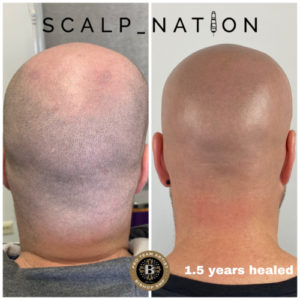
The ageing process affects these procedures differently. With SMP, the pigment fades gradually over 2-5 years into softer versions of the original shade, and how long scalp micropigmentation lasts depends mainly on your skin type, sun exposure, and aftercare. This natural fading actually enhances the realistic appearance, as natural hair often greys or lightens with age.
Traditional tattoo inks can behave unpredictably over time. Poor-quality inks or improper application may result in colour shifts, whilst high-quality work generally maintains its appearance longer before requiring touch-ups.
Sun exposure affects both procedures, but SMP’s shallow placement makes it more susceptible to UV damage. Regular sunscreen application or wearing hats helps preserve the pigment’s integrity and prevents premature fading.
The touch-up process differs significantly between procedures. SMP touch-ups involve adding density or adjusting the hairline as clients age, whilst tattoo touch-ups typically address fading or colour corrections.
Which Option Suits Different Hair Loss Goals?
Scalp micropigmentation suits people who want natural-looking hair restoration. It works well for creating a shaved-head look, adding density to thinning patches, or camouflaging transplant scars.
Traditional scalp tattoos may appeal to people who want a bold artistic statement and not a hair loss fix, and hair tattoo is a broader label that covers decorative designs, symbols, and memorial pieces placed on the scalp.
The scalp micropigmentation vs tattoo decision ultimately depends on your specific goals, lifestyle, and expectations. Use this comprehensive comparison to determine which approach suits your needs.
Decision-Making Comparison Table
| Factor | Choose SMP If… | Choose a Traditional Tattoo If… |
|---|---|---|
| Primary Goal | Natural hair loss solution | Artistic expression or decorative design |
| Appearance | Undetectable buzz-cut look | Bold, artistic statement |
| Professional Environment | Corporate-friendly, subtle results | Creative field acceptance of visible art |
| Active Lifestyle | Swimming, sports without concern | Less frequent water activities |
| Maintenance Preference | Periodic touch-ups every 4-6 years | Longer intervals between touch-ups |
| Pain Tolerance | Lower pain tolerance | Higher pain tolerance acceptable |
| Budget Considerations | Ongoing maintenance costs | Higher initial cost, less frequent touch-ups |
| Hair Loss Stage | Thinning, balding, or transplant scars | Complete hair loss for artistic coverage |
| Age Considerations | Natural ageing with gradual fading | Permanent artistic statement |
| Removal Options | Easier laser removal if needed | More complex removal process |
When choosing a practitioner, verify their specific training and experience in your desired procedure. A talented tattoo artist isn’t automatically qualified for SMP work, just as an SMP specialist may not be the right choice for artistic tattoo designs. Book a Free Consultation with our qualified practitioners to discuss your goals, assess your suitability, and understand the realistic outcomes each approach can provide.
Discuss your goals with a qualified specialist
Book a free consultation with Will Quaye — qualified Clinical Trichologist and multi-award-winning SMP artist. Assess your suitability, understand realistic outcomes, and get a clear picture of what’s achievable for your specific case. Thirty minutes, no obligation.
FAQ
Why is SMP less painful than traditional tattooing?
SMP uses much smaller needles and a gentler dotting technique that penetrates only 2 dermis layers compared to traditional tattooing’s 5-layer depth. Less tissue trauma and shorter needle contact time significantly reduce discomfort levels.
How long does SMP last compared to regular tattoos?
Both procedures offer permanent results, but SMP typically requires touch-ups every 4-6 years as the pigment gradually fades. Traditional tattoos generally last longer before needing refreshing, though this varies based on ink quality and aftercare.
Can SMP be removed if I change my mind?
Yes, SMP can be removed through laser treatments, similar to traditional tattoo removal. However, the shallow pigment placement often makes SMP easier to remove than conventional tattoos, though multiple sessions are typically required.
Is SMP suitable for all skin types and colours?
SMP works effectively across all skin tones, though results may vary in visibility and contrast. Practitioners can customise pigment shades to complement any skin tone, though clients with darker skin may need to be patient with results as contrast develops gradually.


 By Will Quaye

No comment yet, add your voice below!