
Not every change at the front of your scalp means you are losing hair. Most men see their hairline move back a little after their teenage years, and for many of them this is a maturing hairline settling into its adult position. The first step, before any worry or spending, is to work out which of the two you have: a normal adult line or a true receding hairline that keeps moving.
In this guide, we’ll cover how to check at home, what causes hairline loss, how the stages follow one another and which options can hold or restore the front edge.
Key Takeaways
- A mature hairline moves back about one finger’s width by your late twenties and then stays in place.
- Photos taken three months apart reveal more than daily checks in the mirror.
- DHT and inherited follicle sensitivity cause most male hairline loss, and a few other conditions look almost identical.
- Each Norwood stage closes off more options, and recession that starts in your early twenties seldom stops by itself.
- Women lose the front hairline for different reasons, and some of them need a specialist quickly.
- Medication can keep the hairline in place, and a fuller edge can be restored without surgery.
Mature Hairline vs Receding: How Do the Two Compare?
A mature hairline moves back a small, even distance and then stops, whereas a receding one keeps moving and pulls further back at the temples over the years.
A maturing hairline is the normal change from the low, straight hairline of childhood to the higher adult line, and it happens to most men between the late teens and the late twenties as the body finishes puberty. The line rises by roughly 1 to 1.5 cm, very rarely more than 2 cm, and has usually stopped moving by around 30. Both temple corners deepen by a similar amount, and the hairs along the edge keep the same thickness and colour as the rest.
Recession is genuine hair loss caused by temple follicles that react to DHT and shrink at their own rate, so one side frequently moves back faster and the line keeps rising past 2 cm. Shape alone tells you little, since the gap between a defined and soft hairline lies in how sharp the edge looks, and neither type signals hair loss by itself.
| Feature | Mature hairline | Receding line |
|---|---|---|
| Distance moved | About 1 to 1.5 cm, rarely more than 2 cm | More than 2 cm and still moving |
| When it happens | Late teens to late twenties, then stable | Any age after puberty, continues for years |
| Temple corners | Shallow and even on both sides | Deep M or V shape, one side frequently further back |
| Edge hairs | Same thickness and colour as the rest | Finer, shorter and lighter |
| Rest of the scalp | Crown and top unchanged | Crown thinning may follow |
How Can You Check If Your Hairline Is Moving Back?
Five checks done at home over three months give a reliable first answer, and a trichologist can confirm it with a scalp examination.
How Do You Track the Hairline With Photos?
Take one photo from the front and one of each temple, in the same spot by a window, with your hair pushed back and no flash. Repeat the set every three months and look for movement across two intervals in a row, because a single comparison can mislead when the lighting or hair length has changed.
What Does the Finger-Width Test Show?
Raise your eyebrows, find the highest forehead crease and lay your fingers flat above it up to the hairline. A gap of about one finger width fits a mature line, and more than two fingers, or temples set much higher than the centre, points towards recession.
What Is the Fringe Check?
Look at the very edge of the hairline for a thin band of short, fine hairs with sparser hair just behind it. This fringe sign points to traction from tight hairstyles more than to genetics, which changes the advice on what will help.
How Do You Compare Temple and Back Density?
Part the hair at one temple, then just above the nape, and compare how much scalp shows in each spot. Hair at the back resists DHT and keeps its density, so a clear gap between the two zones suggests the temples are thinning.
Are the Edge Hairs Getting Thinner?
Under bright light, compare a few hairs from the front edge with hairs a few centimetres further back. Finer, shorter or lighter edge hairs show miniaturisation, the earliest physical sign of pattern hair loss, and it frequently appears before the line visibly moves.
Mature hairline or early recession? Get clarity
Will Quaye uses trichoscopy to spot miniaturisation at the edge and confirm whether what you see is a settled mature line or active recession. Qualified Clinical Trichologist (Institute of Trichologists). Free 30-minute consultation, in-person or video call. No obligation.
What Makes a Hairline Recede?
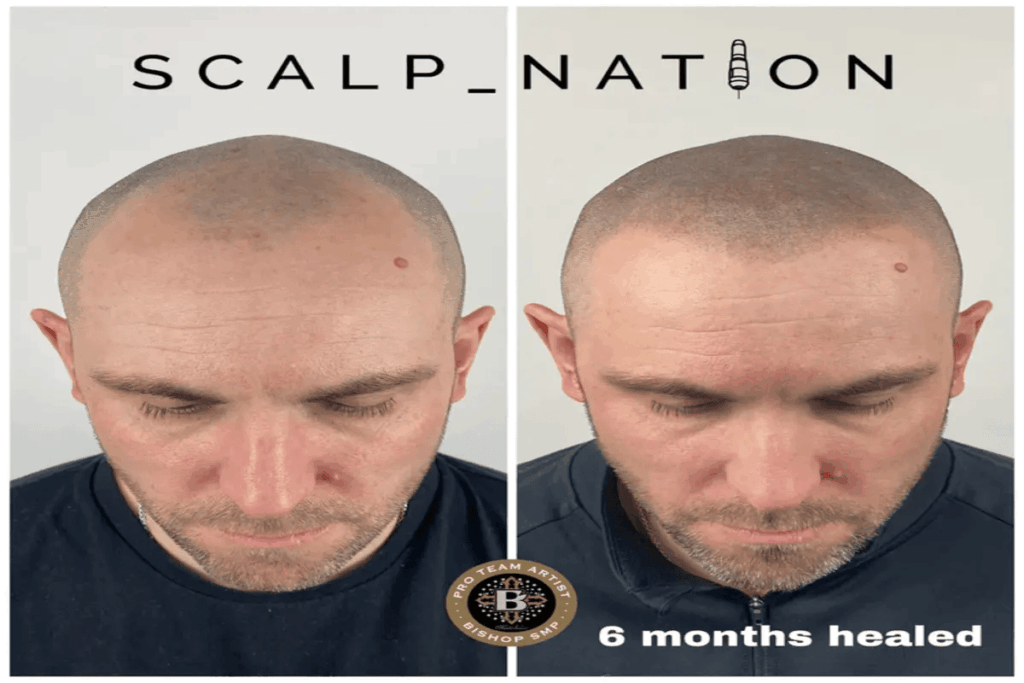
For most men, the cause is an inherited sensitivity to DHT (dihydrotestosterone), a hormone the body makes from testosterone with the help of an enzyme called 5-alpha reductase.
In sensitive follicles, DHT shortens the growth phase of each hair cycle, so every new hair grows back a little finer and shorter than the one before. Follicles at the front and temples react most strongly and those at the back and sides react least, which explains both the M shape and the value of the back of the head as a reference zone.
A few other conditions can thin the front edge, and each one calls for a different response.
- Traction alopecia results from repeated pulling on the roots by tight ponytails, braids, buns, extensions or close-fitting headwear. Caught early, the hair recovers once the tension stops, so easing tight styles and choosing haircuts that suit a receding hairline helps protect the follicles that remain.
- Frontal fibrosing alopecia is a scarring condition that slowly removes a band of hair along the front of the scalp, most commonly in women after menopause.
- Telogen effluvium pushes many hairs into shedding at once, usually two to three months after an illness, surgery, crash dieting or a stressful event, and growth tends to recover within about six months.
- Stress and nutritional deficiencies, such as low iron, vitamin D or zinc, along with thyroid problems, can speed up shedding and make existing recession look worse, and a blood test is the quickest way to rule them out.
What Are the Receding Hairline Stages?
Clinicians classify male hairline loss with the Norwood scale, a seven-stage system that runs from a full juvenile hairline to a horseshoe of hair around the sides and back. The first three stages involve the front only, and each later stage narrows the realistic options.
| Stage | Hairline | What it means | Realistic options |
|---|---|---|---|
| 1 | Juvenile line, no recession | No hair loss | Photos and monitoring |
| 2 | Slight, even rise at the temples | Usually a mature hairline | Monitoring and edge-hair checks |
| 3 | Clear M shape with deep temples | Pattern hair loss confirmed | Medication is most effective at this stage |
| 3 vertex | Stage 3 front with a thinning crown | Loss at the front and crown | Medication and early cosmetic options |
| 4 | Deeper temples and a larger crown patch, with a band of hair between them | Steady loss | Medication to hold, SMP or surgery to restore the look |
| 5 | The band between front and crown thins out | Front and crown about to meet | Cosmetic restoration becomes more useful |
| 6 to 7 | Front and crown joined, horseshoe remains | Late-stage loss | Full-scalp SMP, hair systems, limited transplant options |
Is It Normal for a Hairline to Recede in Your 20s?
Some movement in your early twenties is normal because hairline maturation continues into that decade, but steady movement beyond the mature range at this age is usually the start of pattern hair loss. In a community study of men aged 18 to 49, 16% of those aged 18 to 29 already had moderate to extensive hair loss, rising to 53% of men in their forties.
A parent or grandparent who was bald by 30, fine edge hairs or movement across two photo intervals are all good reasons to act sooner. At this age, the follicles are shrinking but still alive, which gives medication its best chance of keeping the hairline where it is.
How Do You Stop a Receding Hairline?
You can slow or halt pattern recession by reducing the effect of DHT on the follicles and keeping them in their growth phase for longer, with results that take months to appear and last only as long as the treatment continues.
Which Medicines Have the Best Evidence?
Finasteride 1 mg is a prescription tablet that lowers DHT levels in the scalp. In five-year trial data on finasteride 1 mg, dermatologists rated 90% of men taking it as having no further visible hair loss, compared with 25% of men on placebo. The front responds less well than the crown, and a five-year study of Korean men recorded improvement at the hairline itself in 44.4% of patients, against 89.7% at the crown.
Minoxidil, sold over the counter in the UK as a 2% or 5% solution or foam, lengthens the growth phase of each hair, and visible change usually takes three to six months. Receding temples respond best to treatment when the follicles still produce fine hairs, and using both medicines together gives stronger results than either one alone.
What Else Supports the Result?
- Ketoconazole shampoo two or three times a week as a modest add-on
- Low-level laser therapy and PRP injections as extras to medication
- A blood test for iron, vitamin D and thyroid function if shedding is heavy
- Looser hairstyles and a rotating parting to remove traction
Supplements without a proven deficiency, rosemary oil and scalp detox products have little evidence for pattern recession.
Why Do Some Women Lose Their Front Hairline?
Female pattern hair loss usually keeps the front line intact and thins the hair along the parting, so a receding hairline in women more frequently points to traction, scarring alopecia or hormonal change than to genetics.
Tight buns, braids, weaves and extensions worn for years are a common source of edge loss. Frontal fibrosing alopecia causes a slow, band-shaped retreat of the front hairline after menopause, frequently with thinning eyebrows and a smooth, pale strip of skin, and because it scars the follicles, early diagnosis protects the hair that remains. Finasteride is not routinely prescribed for women who could become pregnant, so minoxidil is the usual first option.
See a dermatologist or trichologist promptly if you notice any of the following.
- Itching, burning or redness along the hairline
- Thinning or missing eyebrows
- Smooth, shiny skin where hair used to grow
- Visible change in the hairline within a few months
Can You Restore a Hairline Without Surgery?
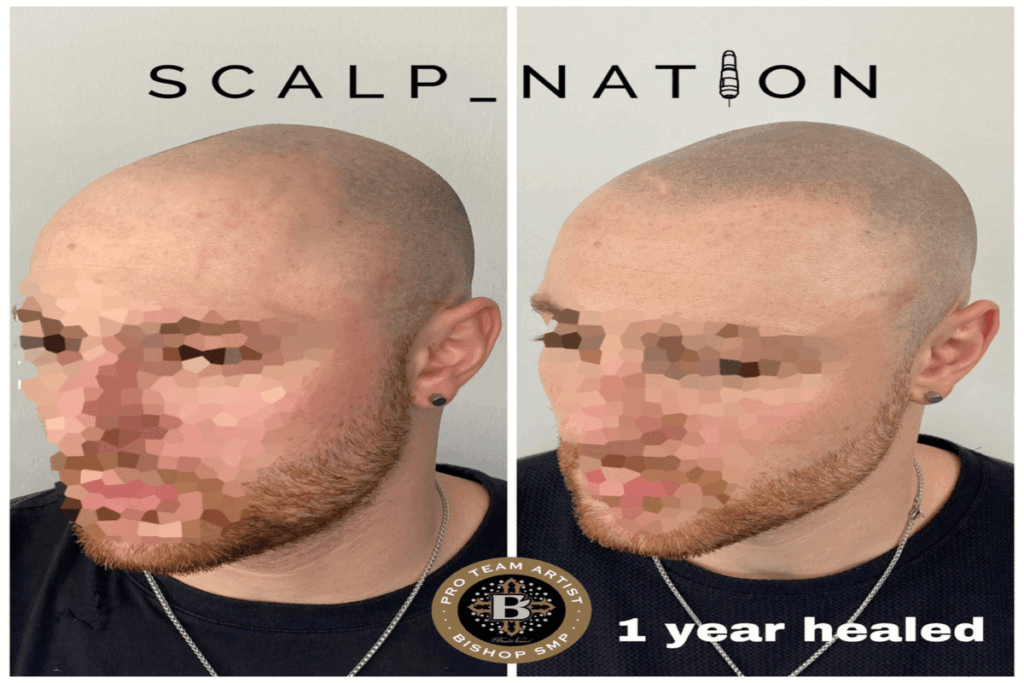
Medication can thicken hairs that are still growing, but it rarely brings back a temple corner that has been bare for years, so restoring the look of a fuller hairline without surgery relies on cosmetic options.
How Much Can Medication Bring Back?
Regrowth is most likely where fine hairs are still present along the edge, and fully bare skin responds poorly. A realistic goal is to keep the current line, thicken the edge and recover part of the lost density.
What Can Scalp Micropigmentation Do for the Hairline?
Scalp micropigmentation places tiny dots of pigment in the upper layer of the scalp to replicate the look of short hair follicles, adding visual density along the front edge and temples. It needs no surgery or donor hair, involves little downtime and works alongside medication that keeps your natural hair in place.
SMP also suits men who keep some hair at the front, because pigment between the remaining hairs reduces the contrast that makes thinning visible.
The position and shape of the new line decide how natural the result looks. Hairline design with SMP sets the edge at a height that suits your age, uses gradual density for a soft finish and matches the outline to your face and skull, so the result looks natural at close range and years later.
FAQ
At what age does a hairline start to recede?
Pattern recession can begin at any point after puberty, most commonly between the ages of 20 and 25. Around 30% of white men are affected by the age of 30 and about 50% by 50.
Can hair at the temples grow back?
Hair at the temples can partly grow back where follicles still produce fine hairs. Skin that has been bare for many years or scarred will not regrow without surgery.
Can wearing a hat make your hairline recede?
Ordinary hats and caps do not cause pattern hair loss. Very tight headwear worn for many hours a day can create traction at the edge, and a looser fit removes that risk.
Does hairline recession always lead to baldness?
Hairline recession does not always lead to full baldness. Many men stay at Norwood 2 or 3 for decades, and the speed of loss varies widely even between fathers, sons and brothers.
Is a widow's peak a sign of hair loss?
A widow's peak is an inherited hairline shape that many people have from childhood, so on its own it is no sign of hair loss. It can look more prominent when the temples recede, which is why the temple corners tell you more than the peak itself.


 By Will Quaye


No comment yet, add your voice below!