
Hair loss in Afro-textured hair rarely follows the same rules as loss in straight European hair, so the standard advice handed to most people misses what is happening at the root. The same coil shape that gives the hair its density and volume also leaves it more fragile, and that fragility is frequently mistaken for loss.
Knowing the real cause is what separates hair that can grow back from hair that cannot. Any hair loss treatment built for Afro-Caribbean hair has to begin by naming that cause, then match the fix to it.
Key Takeaways
- Afro-textured strands are built to be fragile, so breakage is commonly mistaken for hair falling out.
- The causes split into tension, chemical and heat damage, scarring conditions, genetics, and full-body triggers.
- Telling breakage apart from loss decides everything that comes next.
- A handful of early signs quietly point to permanent damage forming.
- A trichologist’s diagnosis shows if regrowth is realistic before any money is spent.
- Treatment runs in order: medication, hair care, nutrients, transplant, and SMP only once regrowth is off the table.
- Prevention protects the hair you still have.
Why Does Afro Hair Break More Easily Than It Looks?
Afro-Caribbean hair grows from follicles shaped as an ellipse, which produces a flat strand that twists into a tight coil as it leaves the scalp. That coiled shape gives the hair its volume, and it also leaves every strand weaker than a straight one. The weakness is built into the shape of the strand from the start.
Three features of the strand explain the fragility:
- Bend points along the coil. Each turn in the coil is a thin spot where the strand is at its weakest, and these are the places where it snaps under brushing or combing.
- Low moisture at the ends. Natural scalp oil cannot travel down a tightly coiled strand, so the ends stay dry and brittle and are the first part to break.
- Reduced strength overall. The flat cross-section reaches its breaking point under less force than round, straight hair.
What Causes Hair Loss in Afro-Caribbean Hair?
Once fragility is accounted for, the true causes of loss fall into five groups. Sorting them into groups is the only way to choose the right fix, because hair loss treatment for Afro-Caribbean clients has to look wider than the scalp itself, taking in styling habits, chemistry, health, and genetics together.
Tension from tight styling
Braids, cornrows, weaves, locs, and high ponytails pull steadily on the follicle. Kept up over months and years, that pull thins the hairline and the temples first, where the strain concentrates.
Caught early, the hair usually grows back once the tension stops, which makes this the most preventable cause of all.
Relaxers, dyes, and heat
Chemical relaxers work at a very high alkalinity to straighten the coil, and that chemistry weakens the cortex inside each strand. Repeated relaxing, colouring, and hot styling stack damage on hair that starts out delicate, showing up as breakage and thinning across the scalp.
Scarring loss and CCCA
Central centrifugal cicatricial alopecia, known as CCCA, is the most common form of scarring hair loss in Black women. It starts at the crown and spreads outward as inflammation quietly destroys the follicles and replaces them with scar tissue.
The loss can carry on for a long time before it is noticed, and once a follicle has scarred, the hair from that spot will not return. CCCA tends to run in families and is linked to a mix of genetics, tight styling, and chemical treatment.
Genetic pattern thinning
Androgenetic hair loss, the genetic kind, affects Afro-textured hair as much as any other type. In men it shows as a receding hairline and thinning at the crown, and in women it shows as a widening parting with loss spread across the top of the scalp.
Full-body triggers
Hair also responds to what is happening inside the body. Low iron, poor nutrition, thyroid problems, and periods of high stress can push large numbers of follicles into shedding at once, producing sudden diffuse thinning that recovers once the trigger is treated.
Is It Breakage or Are You Really Losing Hair?
Breakage and true loss can look identical from across the bathroom, and the fix for one makes the other worse. With breakage, the follicles are intact and still producing hair, so the count holds steady and the strands snap partway along their length, falling short.
With afro hair loss, the follicle itself stops producing, so fewer hairs push through and the scalp starts to show. Get this call wrong, and months of gentle conditioning go into a problem that only medical treatment can fix.
| Sign | Breakage | Genuine hair loss |
|---|---|---|
| Length of fallen hairs | Short, uneven pieces | Full-length strands |
| Root of the hair | No white bulb, just a snapped end | Small white bulb attached |
| Hairline and parting | Unchanged | Receding or widening |
| Scalp visibility | Same as before | More scalp showing through |
| What it responds to | Gentler care and less tension | Medical diagnosis and treatment |
A home check gives a strong hint, but it has limits. Scarring conditions and pattern thinning can look mild at the start, so anything that carries on getting worse is worth a professional look.
Which Early Signs Should You Never Ignore?
A few signs warn of permanent damage forming, and these are the ones to act on quickly.
- A thin band of short hairs left right at the edge of the hairline, with thinning just behind it.
- Tenderness, itching, or a burning feeling on the scalp.
- Small bumps or spots around the follicles.
- A smooth, shiny patch on the crown where the tiny follicle openings have disappeared.
- Even thinning on both sides of the hairline at once.
The last two point toward scarring, and scarred follicles cannot be brought back. Act on them early, before the surrounding hair is affected, and you keep that hair. Ignore them and the bald patch keeps widening.
Why Must the Cause Be Diagnosed First?
Every sensible hair loss treatment for Afro-Caribbean hair starts with a correct diagnosis, because the same bald patch can carry two completely different outcomes. A trichologist examines the scalp under magnification, reads the pattern of loss, and works out which follicles are still alive and which have scarred. That is the purpose of a trichology consultation, and it is where a real plan replaces trial and error.
| Stage or condition | Follicle status | Regrowth realistic | Usual direction |
|---|---|---|---|
| Early traction, no scarring | Alive, under strain | Yes | Remove tension, gentler care, sometimes minoxidil |
| Stress or nutrition shedding | Alive, resting | Yes | Treat the trigger, correct the diet |
| Early CCCA with inflammation | Inflamed, not yet scarred | Partly, if caught early | Anti-inflammatory medical treatment |
| Genetic pattern thinning | Shrinking | Held or slowed, seldom full reversal | Medication and maintenance |
| Late traction or advanced CCCA | Scarred, follicle gone | No | Camouflage or transplant into stable spots |
What Treatments Can Regrow Afro Hair?
For follicles that are still alive, treatment follows a sensible order, from the gentlest option to the most involved. An afro hair loss treatment plan usually moves through the steps below, stopping at whichever one solves the problem.
Step one: Medication
Minoxidil is the common starting point for reversible loss, as it lengthens the growing phase and thickens the strands. CCCA and other inflammatory loss need prescription treatment aimed at calming the inflammation, always under a clinician.
Step two: Hair care changes
Easing the pull, heat, and chemical load the hair takes each day protects the follicles that are still working. Looser styles, gentler detangling, cooler drying, and moisture worked into the dry ends all cut the damage at source.
Step three: Nutrients
When blood tests show low iron or other gaps, correcting them helps the hair recover. Supplements support healthy growth, but they cannot fix loss that comes from tension, scarring, or genetics.
Step four: Hair transplant
A transplant moves living follicles into thinning spots and suits stable, non-scarring loss with enough donor hair. Afro-textured hair makes the surgery more demanding, so it calls for a surgeon experienced with this hair type.
Step five: Scalp micropigmentation
When regrowth is no longer realistic, scalp micropigmentation creates the look of dense, closely shaved hair by placing tiny pigment dots across the scalp. It also covers transplant scars and the smooth patches left by scarring loss. Most loss that has reached this stage is served better by camouflage than by chasing regrowth that will not come.
When Does Scalp Micropigmentation Become the Right Choice?
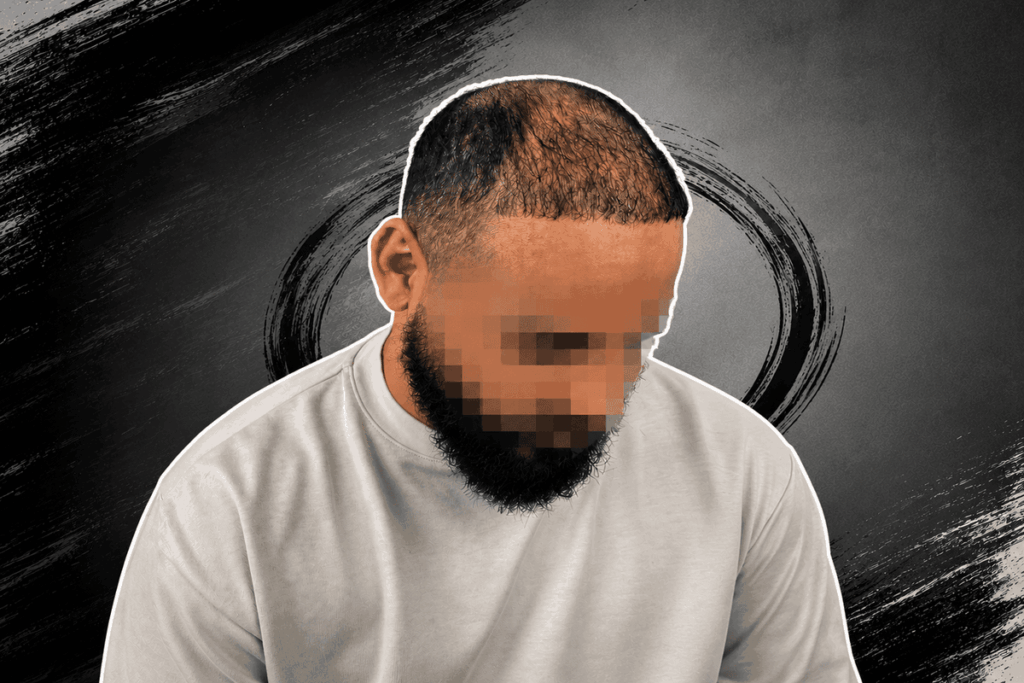
SMP comes at the end of the hair loss treatment options for Afro-Caribbean hair, and it earns that place by working with permanent loss that nothing else can reach.
Scalp micropigmentation for darker skin works best when the technique is built around the skin itself. Follicles read larger on deeper tones, so the pigment dots go on larger and denser to match, and the shade is chosen with warm undertones that hold true without turning blue or green. Melanin-rich skin also holds pigment longer, so results usually last longer than on fair skin before a top-up is needed.
SMP tends to suit:
- Men and women with permanent loss from advanced scarring conditions.
- Anyone covering transplant scars or the marks left by CCCA.
- People who prefer a defined, closely shaved look with no daily upkeep.
One point to raise at consultation is any history of keloid scarring, which is more common on African and Caribbean skin, as a good clinic screens for it before starting.
How Can You Protect Your Hairline Going Forward?
Preventing afro hair loss comes down to lowering the strain your hair lives with day to day. The habits that protect your hair are simple, and they cost nothing.
DO:
- Wear looser styles and change where the tension sits from week to week.
- Give your edges regular breaks from braids, weaves, and extensions.
- Keep heat and chemical relaxing to a minimum.
- Moisturise the scalp and ends, which the UK’s dry air works against.
AVOID:
- Heavy or very long extensions that drag on the roots.
- Tight styles worn overnight.
- Ignoring early tenderness, bumps, or a thinning edge.
Ready to Get to the Root of Your Hair Loss?
The right route depends entirely on what is causing your loss, so the quickest way to find the right hair loss treatment for your Afro-Caribbean hair is a proper look at your scalp.
A single session with a clinical trichologist can name the cause, show which follicles can still recover, and set out the options that fit. Book a free consultation to get a clear plan with no obligation.
FAQ
Can a trichologist tell breakage apart from real hair loss?
Yes. Under magnification, a trichologist can see if the follicles are intact and simply producing snapped strands, or if the follicle count has dropped, which points to true loss.
Does SMP damage the hair I still have?
No. The pigment is placed shallow in the scalp and does not harm living follicles, so it can add density between existing hairs as well as cover a fully shaved head.
Is Afro hair loss treatment available on the NHS?
The NHS treats hair loss caused by an underlying medical condition, but cosmetic care is usually private. Private costs range widely by type, from low-cost medication and supplements to several thousand pounds for a transplant or full-head SMP.
Does PRP or microneedling help with thinning?
Both can help thinning where the follicles are still alive, as they encourage blood flow and growth signals at the root. Neither restores hair from follicles that have already scarred, which is why diagnosis comes first.
Are protective styles like braids always damaging?
No. The damage comes from tightness, weight, and time, not the style itself. Looser braids worn for shorter spells, with rest between them, carry far less risk to the hairline.

 By Will Quaye

No comment yet, add your voice below!