
Two-thirds of men experience noticeable male-pattern hair loss by age 35, rising to 85% by their fifties. This hereditary condition follows predictable patterns driven by hormones and genetics, triggering follicle miniaturisation. Recognising how hair loss progresses biologically and which interventions work helps you make informed decisions about your appearance.
Key Takeaways
- DHT hormone causes progressive follicle shrinkage.
- Multiple genes determine susceptibility and progression.
- Temple recession and crown thinning signal the early stages.
- Medical treatments require 6-12 months to show results.
- SMP provides immediate, permanent appearance changes.
- Early intervention preserves more follicles.
What Causes Male Pattern Hair Loss at the Biological Level?
Dihydrotestosterone (DHT) drives hair loss in genetically susceptible men. This testosterone derivative binds to follicle receptors, triggering a gradual shrinking called miniaturisation. Over successive cycles, affected follicles produce finer, shorter hairs before ceasing production.
Your hair grows in three phases. Anagen (growth) normally lasts 2-7 years. After a brief transition (catagen), follicles enter a 3-month rest (telogen) before shedding. DHT progressively shortens the anagen phase—growth periods shrink from years to months.
The “horseshoe” pattern emerges because follicles along your sides and back resist DHT. Those across your crown and temples lack this protection. Your testosterone levels aren’t unusually high; your follicles simply respond more aggressively to normal hormone quantities.
Does Genetics Really Determine Your Hair Loss Pattern?
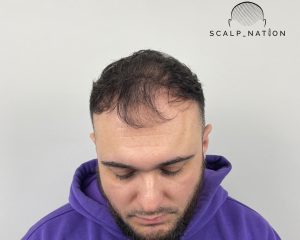
Beyond the “mother’s father” myth, male pattern baldness involves multiple genes working together. A 2017 genome-wide association study by Heilmann-Heimbach and colleagues identified 63 genetic variants linked to hair loss, with only six on the X chromosome. The AR gene plays a role—men with specific variants face twice the risk—but it’s not the sole determinant.
When your father experienced significant balding, you’re highly likely to follow suit. Yet timing and severity vary. Two brothers might both lose hair, but one starts at 22, whilst the other maintains coverage until 45.
Caucasian men show the highest incidence rates, followed by Afro-Caribbean populations.
When Does Male Pattern Baldness Typically Begin?
Hair loss can surface as early as your late teens, though most men notice changes during their thirties. By age 50, more than half display visible signs—temple recession, crown thinning, or density reduction.
The Hamilton-Norwood Scale Stages:
- Stage 1: Minimal recession
- Stage 2: Slight temple recession
- Stage 3: Deep M-shaped or U-shaped hairline
- Stage 4: Crown balding emerges
- Stage 5: Thinning connects the crown and temples
- Stage 6-7: Extensive loss leaves a horseshoe-shaped fringe
Earlier onset correlates with more aggressive progression. Men starting in their twenties often face more extensive balding by their forties. The psychological toll hits hardest for younger men, who report heightened anxiety about professional prospects and dating confidence.
Receding temples signal the most common first change. A widening part or visible scalp when hair’s wet indicates crown thinning.
Get a free, no obligation consultation
Click below to book your free consultation today, and take the first step toward a stronger, fresher, happier you.
Can Lifestyle Factors Accelerate Male Hair Thinning?
Genetics loads the gun, but lifestyle choices can pull the trigger faster. Chronic stress floods your system with cortisol, disrupting hormonal balance and accelerating male hair thinning in susceptible individuals. Modern work pressures and financial strain create perfect conditions for stress-related acceleration.
Nutritional gaps sabotage growth cycles. Iron deficiency particularly devastates hair production—your body diverts resources from non-essential functions during scarcity. Protein shortfalls leave follicles without building blocks. Sleep deprivation throws hormonal systems into disarray. Smoking restricts blood flow to follicles, starving them of oxygen and nutrients.
A trichology assessment can distinguish between genetically driven male pattern hair loss and other forms like telogen effluvium—temporary stress-induced shedding affecting the entire scalp uniformly. Telogen effluvium responds to lifestyle modifications, androgenetic alopecia requires targeted interventions regardless of stress management.
What Are the Most Effective Male Pattern Hair Loss Treatment Options?
Medical interventions target the DHT pathway or stimulate follicle activity. Realistic expectations prove crucial—no treatment restores full coverage to advanced balding, but several options slow progression and promote partial regrowth.
Pharmaceutical Approaches
Minoxidil (over-the-counter 2% or 5% solutions) requires twice-daily application. Most men notice results within 6-12 months if they respond (not everyone does). The 5% concentration works better for men. Discontinuing means a rapid hair loss return. Side effects include scalp irritation, though newer foam formulations reduce this risk.
Finasteride (prescription 1mg tablet) blocks enzyme production, preventing testosterone conversion to DHT. Studies show it halts progression in 99% of users, with two-thirds experiencing regrowth. Sexual side effects affect a small percentage. You must continue indefinitely to maintain results.
Dutasteride (off-label) blocks more enzymes, proving more potent than finasteride but carrying more severe side effects.
Surgical Solutions
Hair transplantation relocates follicles from DHT-resistant areas to balding zones. FUE individually removes follicles; FUT removes a scalp strip. Modern techniques achieve over 90% survival rates. Procedures cost £4,000-£15,000+, require lengthy sessions, and demand weeks of recovery.
For those wanting immediate results without surgery, scalp micropigmentation for men offers a specialised tattooing technique, creating the appearance of closely-cropped hair.
How Does Scalp Micropigmentation Compare to Other Solutions?

Scalp micropigmentation (SMP) deposits pigment 0.5mm into your scalp’s dermal layer. Micro-needles create tiny dots replicating follicles, building realistic density across three sessions spaced 10-14 days apart.
Who Benefits Most
- Men wanting the buzz-cut aesthetic
- Anyone covering transplant scars
- Those seeking density enhancement between thinning hair
- People prioritising immediate results over months-long medication waits
- Men are uncomfortable with ongoing pharmaceutical commitments
SMP delivers visible transformation after the first session, with final results within 30-45 days. Once healed, no daily maintenance exists beyond normal shaving. Pigment fades over 3-5 years, requiring touch-ups. Total costs typically range £2,450-£3,000 for full coverage—less than multi-year pharmaceutical regimens or surgery.
Natural appearance stems from strategic dot placement mirroring random growth. Practitioners vary dot sizes and spacing to create dimensionality. The technique works across all skin tones.
Scalp micropigmentation for women addresses different thinning patterns, demonstrating SMP’s versatility. Some men combine approaches: SMP adds density between transplanted follicles whilst finasteride prevents further miniaturisation.
Why Does Early Intervention Matter for Male Pattern Hairloss?
Pharmaceutical treatments work better when more follicles remain active. Once follicles shrink beyond a threshold, DHT-blocking medications struggle to revive them. Prevention beats reversal.
Hair transplants require sufficient donor hair. Men waiting until advanced balding often lack adequate donor follicles for satisfactory coverage. Earlier intervention creates natural results.
Taking control alleviates mental burden—constant self-consciousness, strategic hat wearing, hyperawareness of lighting. Proactive treatment improves self-perception regardless of dramatic visible changes.
Treating early-stage hair loss requires fewer grafts, less SMP coverage, or shorter pharmaceutical timelines than addressing advanced baldness.
Book a free consultation to assess your stage, discuss progression risks, and explore solutions matching your timeline.
Whether you choose medication, transplantation, SMP, or confident baldness, taking action relieves mental energy consumed by worry. Each approach offers distinct advantages worth exploring.
FAQ
How long do I need to take finasteride or minoxidil to see results?
Most men require 6-12 months of consistent daily use before noticing improvements. Results vary individually. Both treatments work only whilst using them—stopping means hair loss resumes within months.
Will male pattern baldness make me completely bald?
Not necessarily. Many men retain hair around the sides and back, even in advanced stages. The extent varies based on genetics, age of onset, and treatment pursuit. Some experience only temple recession or crown thinning.
Can wearing hats or using hair products cause male pattern hairloss?
No. Male pattern hair loss is genetic and hormonal—hats, styling products, or washing don't cause it. Your hair loss pattern is determined by DHT sensitivity and genetics, not grooming habits.
Is male pattern baldness linked to higher testosterone levels?
Not exactly. Men experiencing hair loss don't necessarily have higher testosterone. The key is follicle sensitivity to DHT (a testosterone derivative), which is genetically determined rather than related to total testosterone quantity.
Can nutritional supplements prevent or reverse male pattern hairloss?
Supplements can address deficiency-related hair problems but won't prevent genetic male pattern hair loss. If your diet lacks iron or protein, supplements may help general hair health. For androgenetic alopecia, medical treatments targeting DHT are necessary.

 By Will Quaye

No comment yet, add your voice below!